A couple staying two nights in Arrowtown will decide which jet boat operator, wine tour and dinner booking get their money somewhere between checking in and their first drink. They are not coming back tomorrow to compare three more websites. Whichever site answers the question fastest in that one sitting gets the booking, and the other operators get nothing that night.
For a large share of Queenstown and Wanaka's visitor economy, that one evening is close to the whole sales cycle. The booking window can run from a few hours to a few days, well short of the multi-week decision window most other New Zealand purchases get.
Queenstown Lakes is also a district where visitor numbers can run several times the resident population through summer and winter peaks, then drop away hard in the shoulder seasons, sometimes within the space of a few weeks. Beach Street in Queenstown and Buckingham Street in Arrowtown feel that swing directly. A site built for one steady, evenly spread audience has to work at two different speeds within the same year, and a generic template built for a single pace struggles with both.
On top of that, Queenstown competes for attention with Aspen, Chamonix and Whistler as much as it does with Wanaka or Te Anau. Visitors researching a New Zealand trip are comparing the same category of business against alpine and lake towns on the other side of the world, often before they have decided which hemisphere to spend their holiday budget in.
One season funds the whole year
Ski season and summer peak carry most of the annual revenue for a large share of Queenstown and Wanaka operators, and the shoulder months exist mainly to keep things moving until the next peak arrives. That rhythm changes what a website is for. Rather than earning trust slowly over a year of return visits, it has to convert close to strangers, in volume, inside a compressed window, because the same visitor rarely gets a second season to make up their mind.
That also means the site has to work hardest on the exact weeks that matter and can afford to coast a little through the rest. A ski shop's homepage needs different imagery, different product priority and a different headline in July than it does in January, and the site has to make that shift without waiting on a developer every time the season turns over. Content built entirely around booking a summer adventure loses relevance the moment ski season opens, and a site that needs a full rebuild to shift focus for winter costs time and budget at exactly the point in the year neither can be spared.
One website, two very different customers
A rafting company sells day trips to visitors who found them nine hours ago and gear hire to locals who have used them for three years. A retail store on the main street sells a hoodie to a tourist paying for the memory as much as the product, then takes a repeat order from a local who wants their usual size restocked without driving into town. Both audiences land on the same website, often the same page, and they are not looking for the same proof or the same next step. Navigation and content need to work for both mindsets without confusing either, a booking pathway built for someone deciding in the next 48 hours sitting alongside a returning-customer pathway for someone who already knows the brand and just wants to reorder.
For a retail business, that split is also where online sales start to matter. A shop that sees itself only as a physical, tourist-facing store leaves local repeat revenue on the table, particularly through the off season when foot traffic drops away. Building that side properly means a full ecommerce build, and for a retail brand with a real product range that means Shopify, where design and build happen together inside Shopify's own theme architecture rather than as two separate stages.
Connecting to the booking and payment systems you already run
Most Queenstown tourism operators already run a booking platform, and most retail stores already run point of sale and accounting software before a new website gets discussed. A new site does not replace any of that. It needs to sit cleanly alongside whatever booking tool, payment gateway or stock platform the business already relies on, whether that is a tour booking system, Xero, Stripe or Windcave.
We scope and manage those connections as part of a build rather than treating the website as a standalone piece that happens to sit next to the rest of the business. The technical work of an individual integration sits with the relevant platform or provider, and our role is mapping exactly how it needs to function inside the site, so a booking made on the homepage lands in the same system the team already checks every morning.
Queenstown's competition is international
Visitors planning a trip through Queenstown or Arrowtown are often comparing the same categories of business against Aspen, Chamonix, Whistler and other alpine and lake towns that trade on the same premium positioning. A generic template site, however tidy, reads as an afterthought next to that comparison set, and it costs bookings before a single enquiry email gets sent. A family in Melbourne weighing up the Southern Alps against Whistler, or a homeowner in Colorado researching a New Zealand ski trip, forms an impression of the whole destination from whichever handful of business websites turn up in their search results.
First impressions form fast, and for a visitor deciding between six similar-sounding tour operators or lodges, a good part of that decision happens before they have read a full sentence of copy. We covered how that trust window works and what damages it in five seconds to trust, and it applies with more force here than in most other parts of the country, because the visitor has three or four premium alternatives sitting open in other tabs.
A short decision window doesn't leave room for confusion
Enquiry-led and considered-purchase businesses in Queenstown work against an even tighter clock than most tourism operators. A luxury lodge, a private tour or a custom experience gets decided carefully, and the visitor is choosing between a handful of premium options with real money at stake, inside a stay that might run three or four days. A confusing site, an unclear price range or a booking form that asks the wrong questions first sends that enquiry to a competitor's inbox instead of the operator's own.
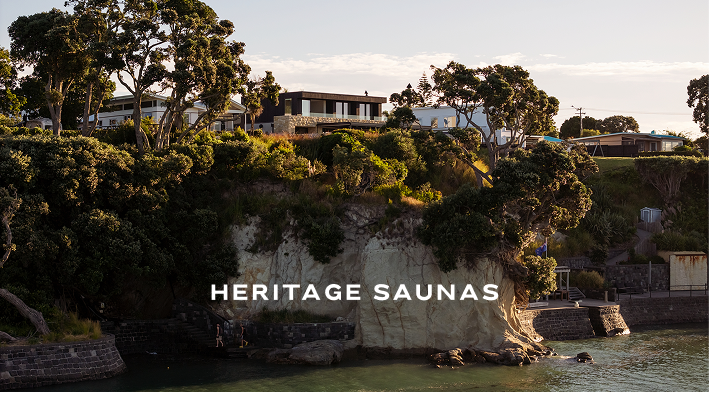
Heritage Saunas shows what that clarity is worth for a considered purchase, even outside tourism. The site launched before a single sauna had been finished, with no product photography and no paid advertising running behind it. It still reached a 4.6% enquiry conversion rate against a 2.7% industry benchmark, generating two to three qualified leads a week within three months of going live.
For Queenstown and Wanaka operators without a heavy product catalogue, that kind of clarity gets built in Webflow, where content, imagery and booking pathways get structured around the guest's actual decision rather than a fixed template's page order.
Common questions
What makes web design in Queenstown different from other parts of New Zealand?
The seasonal swing between peak and shoulder months, a customer base split between visitors and residents and a competitive set that includes international alpine towns all change what a site needs to do. A build that ignores any one of these tends to underperform even when it looks sharp, because it is solving for the wrong season or the wrong customer.
Do we need an online store if most of our sales happen face to face?
Often yes, particularly for retail and hospitality brands with a product range. A proper online store captures local repeat business and off-season revenue that a physical, tourist-facing counter alone cannot reach.
How long does a Queenstown tourism or retail website build take?
Most builds run a small number of months from strategy through to launch. Timing the launch around the season you need the site live for matters as much as the build itself, so we plan backwards from that date rather than forwards from a start date, especially when a launch needs to land before ski season or the summer peak.
Can one website work for both summer and winter offerings?
Yes, when it is built on a content structure that supports it. A Webflow site set up with the right CMS structure lets you shift focus for the season without a rebuild each time the calendar turns over.
Do you only work with tourism businesses in Queenstown and Arrowtown?
Not exclusively. We also work with established retail, hospitality and professional services businesses across the district and further afield, from our studios in Auckland and Arrowtown, and many of those brands see the same seasonal swings and mixed visitor and local customer base even outside adventure tourism.
How do we choose between competing website quotes?
Price is one part of a much larger decision. We've set out the fuller framework, including what to check beyond the number on the quote, in how to choose a website agency in NZ.
A website built for how Queenstown visitors and locals actually decide takes real thought about your season, your two audiences and the short window visitors give you. Talk to us about a Webflow website design project through our contact page, from either our Auckland studio or our Arrowtown office.