We build Shopify stores for established businesses. The brief starts with what the store needs to sell, not how it should look.










Before anyone talks about design, there's a more useful conversation. What does this store actually need to do and for whom. For a first build, that question sets the brief properly. For an existing store, it's usually the question that wasn't asked the first time. The answer determines whether the finished store justifies what it costs.

Every project starts from a different position. What stays constant is the first question: what does this need to achieve commercially? The steps below are built around the answer.
Before anything gets designed, we need to understand what the store is actually for.
Every design decision comes back to the brief, not the portfolio.
We build in Shopify using the architecture agreed in the design phase.
We don’t hand over a login and leave.
“We hired Skyrocket to rebuild our two websites on Shopify (one for NZ, one for Australia) and we were extremely satisfied with the whole experience. Skyrocket were efficient and cost-effective, delivering everything we wanted for our websites on time and on-budget....I have 15 years of experience in e-commerce and performance marketing, working both client side and agency side ... I can honestly say that our project with Skyrocket was one of the smoothest I’ve experienced, and I would enlist them again in a second.”
Courtney Sanders - Clean collective
A new Shopify store built around what the business needs to sell. Product architecture, UX design, custom development and a handover that leaves your team confident running it from day one.
Already on Shopify and ready to push it further. We audit what the current store is doing, identify where revenue is being left behind and rebuild or redesign with a clear commercial brief.
Ongoing development for stores that need a specialist in their corner. Feature additions, performance work, seasonal builds and the day-to-day improvements that compound over time.





For product-led ecommerce, Shopify is almost always the right choice. It handles inventory, orders and payments better than anything else at its price point. Webflow handles ecommerce for smaller catalogues where design is the primary concern. We will tell you which is right before the project starts.
Most ecommerce builds run ten to fourteen weeks from a signed brief to launch. Larger catalogues, custom integrations or complex shipping setups take longer. Scope and timeline are agreed before you commit.
Yes. Product data, imagery, categories and variant setup are all included in the scope. If you are migrating from another platform, we handle that too, including preserving your existing URL structure and search rankings.
Yes. We set up the admin to match how your team works and train everyone before handover. Updating products, running promotions and managing orders do not require a developer.

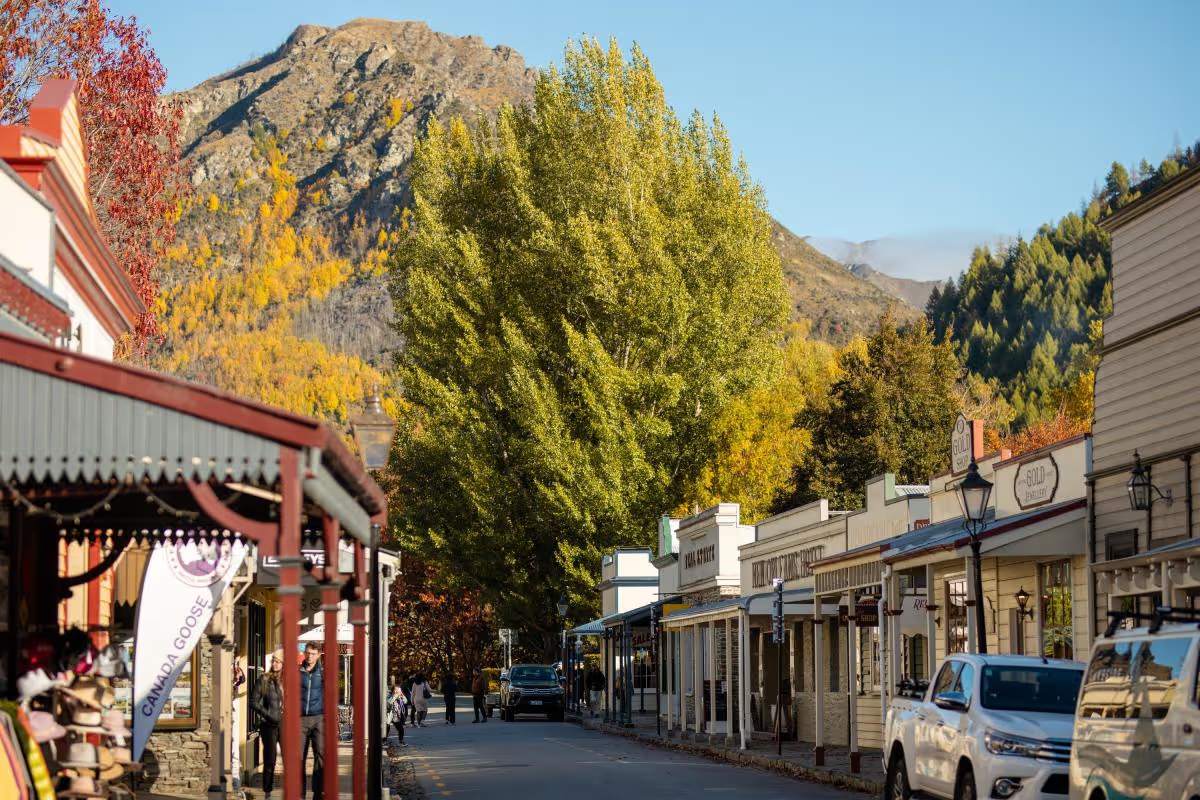
Before a project starts, we often come to you. Sitting in your space, understanding how the business operates and working through the brief face to face gives us context that a video call doesn't quite replicate.

.png)